

Walton County Restaurant Seller Agent: 2026 Owner's Guide
What if the biggest risk in selling your restaurant is starting buyer conversations before you have a verified plan? A capable Walton County restaurant seller agent can help organize the sale around valuation, marketing, buyer communication, and transaction milestones. Before hiring one, ask how the business will be assessed, whether its records are ready, and how the representative approaches restaurant sales in Walton County and the wider Florida Panhandle.
This guide explains what to look for in a seller agent and what to clarify before signing an engagement. You’ll learn how to prepare financial and operational records, present the business clearly, and ask questions about the lease, licensing coordination, confidentiality, and the agent’s role from listing through closing. Brokerage and licensing support can relate to the same transaction, but they are distinct services. Confirm what is included and what requires separate guidance.
A clear process can help you approach buyer discussions with better preparation and fewer avoidable surprises. The right representative should explain how valuation, marketing, buyer qualification, and transaction support fit your sale, while setting realistic expectations rather than promising a particular price or timeline.
Key Takeaways
- Clarify what a seller agent will handle, how brokerage differs from real estate representation, and what the engagement includes.
- Use a step by step sale plan that connects your goals and readiness with valuation assumptions and buyer outreach.
- Compare Walton County restaurant seller agents on restaurant sale experience, local familiarity, communication, and marketing approach.
- Organize financial statements, operating records, lease details, and license information for buyer review.
- Ask how brokerage and licensing guidance fit together, and what support is separate, before selecting a representative.
What a Walton County Restaurant Seller Agent Does for an Owner
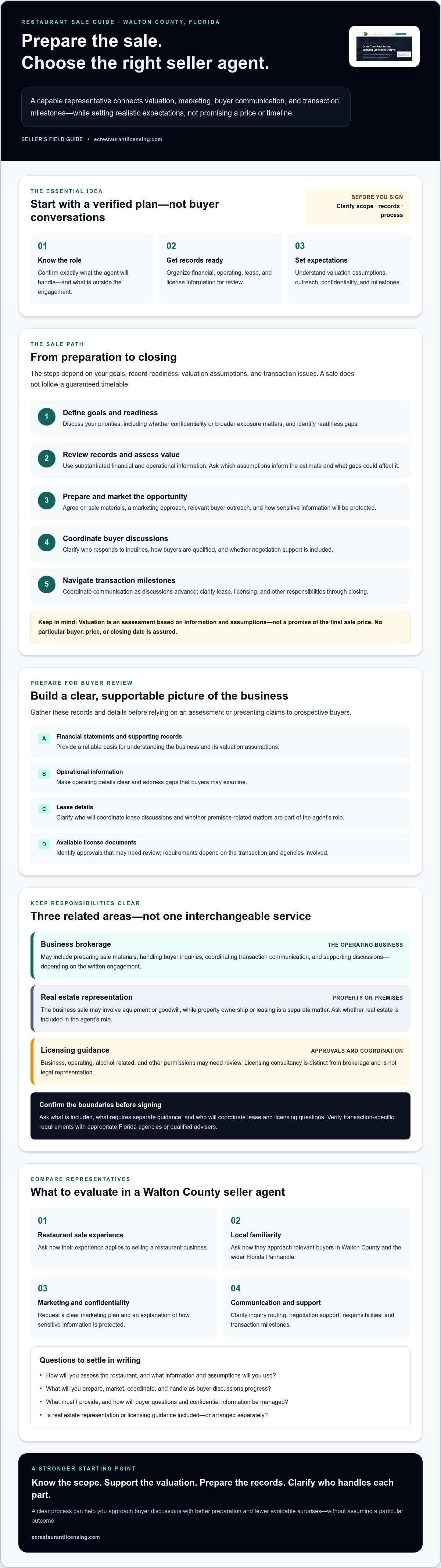
A restaurant seller agent is a business broker engaged to help an owner prepare, market, and coordinate the sale of a restaurant. Unlike a listing platform, which displays an opportunity, an agent can help with the work around the listing: preparing sale materials, responding to buyer inquiries, and keeping communication moving as discussions progress. Business brokers generally assist with buying and selling businesses, but the specific services depend on the engagement.
Business brokerage is not automatically the same as real estate representation. A restaurant sale may involve the operating business, equipment, or goodwill, while ownership or leasing of the premises is a separate property related matter. Ask whether the agent represents only the business sale or also handles any real estate component. If there is a lease, clarify who will coordinate lease discussions and what falls outside the brokerage role.
What services should a restaurant seller agent provide?
Start with valuation. Ask how the agent will assess the business, which financial and operational information the analysis uses, and which assumptions could affect the estimate. A valuation is a reasoned assessment, not a promise of the final sale price. You should understand how the agent plans to present the restaurant’s strengths and address issues buyers may examine.
Next, review the proposed sale process. Depending on the written engagement, brokerage support may include preparing marketing materials, handling buyer inquiries, coordinating transaction communication, and assisting as discussions advance. Confirm what the agent will do, what you must provide, how buyer questions will be routed, and whether negotiation support is included. Get the scope, confidentiality practices, responsibilities, and transaction milestones in writing before signing.
For an owner in Walton County, local familiarity is useful when the agent can explain how they’ll approach relevant buyers and present the opportunity. Local knowledge does not guarantee a particular price or level of demand. Ask for a clear marketing plan and an explanation of how the agent will protect sensitive business information.
When does a seller need licensing or transaction support?
A change in restaurant ownership can raise questions beyond marketing and buyer negotiations. Business and operating licenses, alcohol related approvals, and other permissions may need review, depending on the transaction and agencies involved. Don’t assume a buyer can simply use the seller’s existing approvals or that every sale follows the same steps.
Verify transaction specific requirements with the appropriate Florida agencies or qualified advisers. Licensing consultancy can help an owner understand and coordinate licensing related steps, but it is distinct from brokerage and is not legal representation. Ask whether licensing guidance is included in the brokerage engagement or must be arranged separately. Clear boundaries help you identify who handles each part of the transaction before a question becomes a delay.
How a Walton County Restaurant Sale Moves from Preparation to Closing
A restaurant sale involves a sequence of decisions and reviews, not a fixed timetable. The initial plan should reflect your goals, the condition of your records, valuation assumptions, and any issues that could affect readiness. An owner seeking a confidential sale, for example, may need a different marketing and inquiry process from one prioritizing broader exposure. A Walton County restaurant seller agent should explain how your priorities shape the proposed process without promising a particular buyer, price, or closing date.
What should happen before a restaurant is marketed?
Begin by gathering financial statements and supporting records, operational information, lease details, and available license documents. These give the broker a reliable basis for understanding the business and identifying questions to resolve before buyer discussions. For a more detailed preparation list, see Documents Needed to Sell a Restaurant in Florida: The 2026 Seller’s Checklist.
Valuation depends on substantiated information and disclosed assumptions. Ask what records inform the analysis, how the broker will explain the estimate, and what gaps could change the assessment. If sales, expenses, or operating details are unclear, address them before relying on a valuation or presenting claims to prospective buyers. Marketing materials should accurately reflect available information and protect confidential details according to the agreed process.
How should buyers, diligence, and transition questions be handled?
Once marketing begins, agree on how inquiries will be received, what information can be shared at each stage, and how buyer questions will reach you. Ask the prospective agent how they assess buyer seriousness and coordinate follow up. These are process questions, not assurances that a specific kind of buyer will be available.
Interested buyers may request additional records and review business operations as part of diligence. Lease arrangements, license matters, and the operational handoff can raise questions that depend on the business, transaction structure, and applicable agencies. Have relevant requirements verified by the appropriate Florida agencies or qualified advisers. The Florida real estate broker license resource explains the state’s licensing information for real estate agents and brokers, including business enterprise sales.
For broader context on ownership transitions, consult Navigating a Restaurant Ownership Change in Florida: The Strategic Buying Guide. Brokerage and licensing guidance may support related parts of a transaction, but they are distinct. Confirm who is responsible for each item.
Confirm these engagement milestones in writing: preparation, valuation, marketing launch, buyer inquiry handling, diligence coordination, and closing support. Owners who want to understand the brokerage and licensing support available through Emerald Coast restaurant services can review the provider’s information as they plan their next steps.
How to Compare Walton County Restaurant Seller Agents
Choosing representation isn’t just a choice between the lowest fee and the biggest promise. Compare what each agent will actually do, how they’ll communicate, and whether their experience fits your restaurant and transaction. A side by side comparison helps you assess the value and scope of support before deciding what level of commitment makes sense.
Which questions reveal relevant restaurant sale experience?
Ask each prospective Walton County restaurant seller agent about restaurant transactions they’ve handled, the types of businesses involved, and their specific role. You don’t need confidential client names or deal details. You do need a clear account of the work they performed and how it relates to your sale.
Then ask how they would approach your restaurant’s likely buyer profile. A useful answer should connect the business’s documented strengths and circumstances to a proposed marketing approach without implying that a particular buyer or outcome is assured. If an agent cites Walton County experience, ask what that means in practice and whether the examples reflect current knowledge of the area. You can also review industry guidance on preparing your restaurant for sale as you assess how an agent’s process addresses readiness.
How can an owner assess terms and communication?
Compare proposals side by side. Look for specific answers in these areas:
- Valuation: What information and assumptions inform the assessment, and how will they be explained?
- Marketing: What materials and outreach activities are included, and how will confidentiality be addressed?
- Buyer handling: Who receives inquiries, evaluates buyer readiness, and coordinates follow up?
- Reporting: How often will you receive updates, and what will they cover?
- Engagement terms: What services and owner responsibilities are written into the agreement? Review exclusivity, term, termination language, and fee structure.
Communication matters once the restaurant is being presented to buyers. Ask who will be your main contact, how buyer questions will be relayed, and what happens if an issue needs your decision. Compare the written plan and service scope, not verbal assurances alone. If two proposals differ, clarify whether the difference is in the work provided, level of support, or engagement terms.
Before you commit, read the agreement carefully and ask for unclear terms to be explained. The right representative is the one whose documented process, relevant experience, and communication approach fit your needs. No ranking can substitute for that comparison, and no agent can guarantee a sale price or closing date.
Prepare Your Walton County Restaurant Before Hiring a Seller Agent
Getting organized before you engage a broker makes it easier to identify gaps early and discuss the business on a reliable basis. You don’t need every question resolved before beginning, but you should be able to distinguish what’s documented from what still needs verification. Consistent records can support valuation discussions and help prospective buyers review the opportunity with fewer avoidable delays.
Which records should an owner organize first?
Gather a working set of records for an initial review. Organize files into clear categories so you and a Walton County restaurant seller agent can see what is available, what is missing, and what may need updating:
- Financial: Statements and supporting records that explain revenue, expenses, and other figures used to discuss business performance.
- Ownership and operations: Entity or ownership documents, operating procedures, equipment details, and records that help explain how the restaurant functions.
- Lease and property: The current lease and related documents, plus a clear distinction between assets included in the sale and property related arrangements.
- Vendors and employees: Relevant supplier agreements and staffing or employment records, handled with appropriate care for confidential information.
- Licenses: Available business and operating license information, including documents that may need confirmation for a specific transaction.
Check for missing pages, inconsistent figures, outdated contact details, or documents that refer to different terms. Don’t resolve discrepancies by assumption. Note them for follow up with the broker, accountant, attorney, licensing consultant, or other appropriate professional. For a fuller inventory, consult the Florida restaurant seller document checklist referenced in this guide.
How can sellers protect a smooth and accurate process?
Before sharing sensitive material, agree with the agent on who may receive it, what information can be shared at each stage, and how buyer inquiries will be handled. Keep one organized set of current materials, and track what has been provided and to whom. This helps maintain consistent communication without implying that every buyer will receive the same information automatically.
Marketing materials should describe only what you can substantiate. Avoid unsupported claims about revenue, equipment condition or ownership, license status, and property rights. If a detail is uncertain, flag it for verification rather than presenting it as settled. Local, state, and transaction specific requirements can vary, so confirm them with the appropriate agency or qualified adviser before relying on an assumption.
Preparation is about clarity, not perfection. If you want to discuss how sale readiness connects with brokerage and licensing guidance, explore restaurant sale support and confirm which services fit your situation.
Choose a Walton County Seller Agent with Brokerage and Licensing Clarity
A strong fit is not only about local familiarity. It is also about knowing which parts of a restaurant sale the representative handles, what requires separate support, and how responsibilities will be documented. Emerald Coast Restaurant Licensing Service serves Walton, Okaloosa, and Bay counties. Its capabilities include guidance on valuation, marketing, and transaction support for buyers and sellers.
For a Walton County restaurant seller agent to be a practical match, the proposed engagement should explain how these services apply to your sale. Ask what information is needed for valuation, how marketing will be prepared, how buyer communication will be coordinated, and what transaction support is included. Confirm responsibilities, engagement terms, and any limits in writing. No process can assure a particular price, buyer, or closing date.
What can Emerald Coast support include?
Brokerage and licensing guidance can relate to the same ownership transition, but they are separate service areas. Brokerage support concerns the sale process, including valuation, marketing, and transaction assistance. Licensing and compliance consulting may be relevant when the owner or buyer needs help identifying and coordinating licensing related steps. It is not legal representation, and transaction specific requirements should be verified with the appropriate agencies or qualified advisers.
Before engaging either service, clarify what is included, who is responsible for each task, and what falls outside the agreed scope. This helps you determine whether you need brokerage alone or separate licensing and compliance support as well.
What should a seller bring to an initial conversation?
You don’t need a perfect sale file to start a useful discussion. A short, accurate overview can help establish the right questions and next steps. Consider preparing:
- A brief description of the restaurant, its location, and how it operates.
- Your sale goals and any timing or transition concerns you already know about.
- A general list of available financial and operating records.
- Questions about the lease, licenses, or other matters that need verification.
Share sensitive documents only through an agreed process, and ask how information will be handled. If you’re still gathering records, say what is available and what remains outstanding. Clear questions make it easier to discuss whether the proposed scope fits your situation and whether separate licensing guidance may be relevant.
For a measured next step, discuss your restaurant sale with Emerald Coast Restaurant Licensing Service and ask about the brokerage scope, responsibilities, and terms that would apply to your circumstances.
Set Your Restaurant Sale Up with a Clear Plan
A well prepared sale begins with a grounded valuation, organized records, and a clear understanding of what your representative will handle. Compare agents on restaurant sale experience, Walton County familiarity, communication, and written engagement terms. Confirm how buyer inquiries, transaction support, and any separate licensing questions will be addressed.
Emerald Coast Restaurant Brokers serves Walton, Okaloosa, and Bay counties. Its brokerage support includes valuation, marketing, and transaction assistance. Licensing and compliance consulting is a separate area of support, so clarify the scope and responsibilities that fit your transaction before engaging.
If you’re considering a sale, bring your goals, business overview, and open questions about records, the lease, or licenses to an initial discussion. Discuss your Walton County restaurant sale with Emerald Coast and explore what support may fit your needs. A clear next step can help you move forward with a process built around your situation.
Frequently Asked Questions
What does a restaurant seller agent do in Walton County?
A restaurant seller agent helps an owner prepare and market a business for sale, respond to buyer inquiries, and coordinate transaction communication. In Walton County, brokerage support may include valuation, marketing, and transaction assistance. It is not legal representation, licensing consultancy, or automatically real estate representation. Confirm each provider’s role and written scope, verify license requirements with relevant agencies, and clarify separately whether any property related representation is needed.
How do I choose a restaurant seller agent in Walton County?
Choose a Walton County restaurant seller agent by comparing restaurant transaction experience, knowledge of the local area, and a written explanation of services. Ask about the agent’s role in similar transactions without requesting confidential client details. Review how valuation assumptions will be explained, how buyer inquiries will be handled, and how often you’ll receive updates. Check that claims about experience, marketing, and local knowledge are specific and verifiable.
How much does a restaurant seller agent charge in Florida?
Restaurant seller agent fees and terms vary by engagement, so request the proposed fee structure in writing rather than relying on a verbal estimate. Review how compensation is calculated, when it becomes payable, and whether other charges or conditions apply. Compare the fee with the services and responsibilities listed in the agreement. Ask for unclear language to be explained before you sign, and don’t assume every broker uses the same arrangement.
How long does it take to sell a restaurant in Walton County?
There’s no reliable timeline that applies to every restaurant sale in Walton County. The process can depend on business readiness, the completeness of records, buyer interest, due diligence, and transaction specific requirements. Lease, license, or ownership questions may also need review by appropriate agencies or advisers. Ask a prospective agent to explain the sale stages and likely factors that could affect progress, but treat any timing discussion as an estimate, not a promise.
Can a restaurant seller agent help with license transfers in Florida?
A restaurant broker can coordinate transaction communication, but brokerage and licensing consultancy are distinct services. A licensing consultant may provide separate guidance on licensing related steps, while requirements depend on the business and transaction. Confirm the proposed scope and responsibilities, and verify applicable requirements with the relevant Florida agencies or qualified advisers. Neither brokerage nor licensing consulting should be mistaken for legal representation or a substitute for transaction specific legal advice.
What documents should I prepare before listing my restaurant?
Start by organizing financial statements and supporting records, ownership information, operating records, lease documents, vendor details, and available license information. Check for missing, outdated, or inconsistent items before sharing materials with prospective buyers, and flag questions for follow up. For a fuller inventory, review Documents Needed to Sell a Restaurant in Florida: The 2026 Seller’s Checklist. Share sensitive records through a process agreed with your representative.
Should I hire a restaurant broker before putting my business on the market?
Speaking with a restaurant broker before marketing can help you organize valuation inputs, identify records to gather, and understand what sale preparation may involve. An early discussion can also clarify the broker’s proposed marketing and transaction support, along with your responsibilities. It doesn’t guarantee a buyer, sale price, or timeline. Ask what information the broker needs for an initial assessment and confirm all services and engagement terms in writing before proceeding.