
Expert Florida Restaurant Sales & Licensing 2026
A single administrative oversight in your DBPR transfer can freeze your restaurant sale for months, even if you have a qualified buyer standing at the door. In the high-stakes 2026 market, professional restaurant seller representation Florida ensures that your hard-earned equity doesn't vanish during the transition. You've spent years building a brand and managing margins, but a botched alcohol license transfer or a surprise wage audit can derail a closing in days.
We understand the weight of protecting your legacy while facing the uncertainty of a complex sale. It's stressful to navigate the gap between your business's true value and the rigorous requirements of Florida's regulatory agencies. This article shows you how specialized representation protects your interests and ensures a seamless transition of licenses and assets. We'll preview the 2026 landscape, including the impact of the commercial rent tax repeal and the $15.00 minimum wage hike. You'll learn how a structured roadmap prevents post-closing liabilities and secures the high-value exit you've earned.
Key Takeaways
- Professional restaurant seller representation Florida safeguards your business equity by navigating complex DBPR transfers and regulatory hurdles before they stall a closing.
- Identify hidden red flags through a pre-sale compliance audit to protect your business valuation and prevent unexpected post-closing liabilities.
- Distinguish between the roles of business brokers, licensing consultants, and attorneys to build a specialized team that handles both financial negotiations and administrative requirements.
- Execute a Sell-Ready audit including mock inspections and equipment lease verifications to ensure your operation remains attractive and compliant for potential buyers.
- Leverage local Panhandle expertise to manage the specific seasonal and regulatory challenges unique to restaurant transitions in Walton, Okaloosa, and Bay counties.
The Complex Reality of Restaurant Seller Representation in Florida
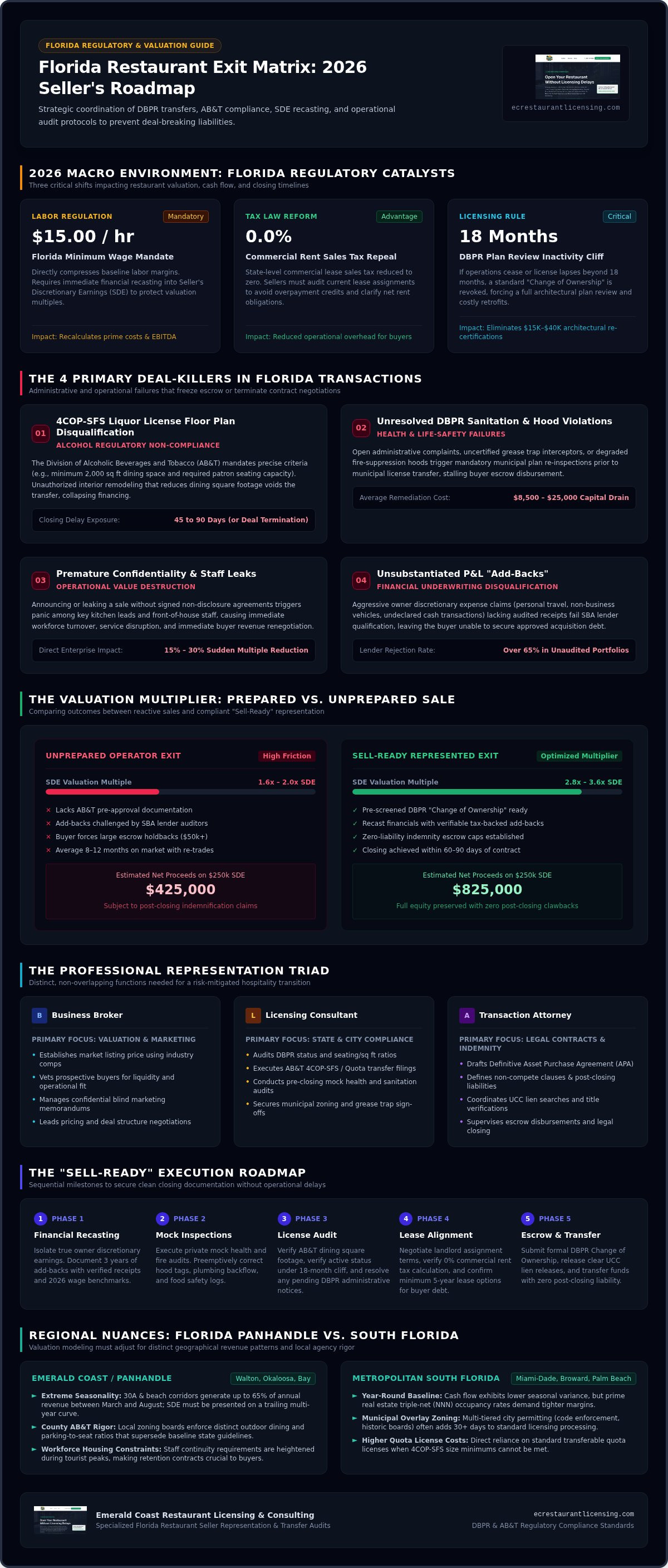
Selling a restaurant isn't like selling a retail boutique or a dry cleaner. It's a high-stakes transition involving food safety, labor laws, and strict alcohol regulations. Seller representation is the strategic coordination of valuation, marketing, and regulatory compliance. Engaging in professional business brokerage goes beyond finding a buyer; it involves auditing your operation to ensure it's actually sellable before it ever hits the market. Florida owners face unique hurdles, from strict DBPR oversight to the 2026 minimum wage increase to $15.00 per hour, which directly impacts valuation metrics like Seller's Discretionary Earnings (SDE).
Beyond the Price Tag: What Sellers Often Overlook
A buyer might offer a premium price, but that offer is worthless if the 4COP-SFS license can't transfer because the dining room dropped below the 2,000 square foot requirement. The Florida Department of Business and Professional Regulation (DBPR) maintains strict standards for ownership changes. In the Panhandle, local regulations in Walton or Bay County often differ from the heavy metropolitan rules of South Florida. For instance, seasonal traffic patterns on 30A require a different valuation approach than a year-round spot in Miami. We also ensure sellers account for the 2026 reality where commercial rent sales tax is 0%, a change that should be reflected in your lease assignments to prevent overpayment during the transition.
The Consequences of Poor Representation
Inadequate preparation often leads to the "Deal-Killer" list. This includes unresolved health code violations that trigger a mandatory plan review if the facility has been closed or poorly maintained. Missing AB&T documentation can stall escrow for weeks, frustrating buyers and lenders alike. Perhaps the most damaging risk is a confidentiality breach. If your staff hears about a sale before it's finalized, you risk a mass exodus that destroys the business's value overnight.
Moving from the role of an operator to a seller requires a strategic shift. You must stop looking at the daily grind and start viewing your restaurant as a compliant, profitable asset. Professional restaurant seller representation Florida provides the steady hand needed to navigate these administrative minefields while you focus on maintaining your operational standards. It's about moving away from a state of uncertainty toward a feeling of being protected and prepared for a clean exit.
Core Pillars of Professional Restaurant Brokerage and Licensing
A successful exit rests on specific pillars that transform a potentially chaotic sale into a controlled, high-value transfer. Professional restaurant seller representation Florida integrates deep financial analysis with regulatory foresight to ensure no equity is left on the table. While traditional brokers often focus solely on the numbers, specialized representation treats your licenses and compliance history as the critical assets they are. These pillars provide the steady hand needed to move from a state of uncertainty to a predictable, error-free journey.
The Strategic Valuation Process
Determining your asking price starts with an accurate business valuation. This process involves more than just reviewing a balance sheet; it requires a deep audit of P&L statements to identify "Add-Backs." These are legitimate expenses, such as owner salaries, non-recurring repairs, or discretionary travel, that are added back to net income to reveal the true Seller's Discretionary Earnings (SDE). Buyers pay for cash flow, and identifying every dollar of SDE is essential for maximizing your return.
Licensing readiness provides a significant premium to your valuation. A turnkey operation that has maintained its standing with the Florida Division of Hotels and Restaurants is far more attractive than one facing a complex plan review. If your facility has remained active and has not been closed for more than 18 months, the buyer can often apply for a "Change of Ownership" without a full architectural review. This operational readiness reduces the buyer's risk and justifies a higher multiple during negotiations.
Navigating DBPR and AB&T Requirements
Licensing is frequently the primary reason restaurant deals fail in the final hour. We proactively audit your current standing with the Division of Alcoholic Beverages and Tobacco (AB&T) to verify the status of your 4COP, 2COP, or SRX license. For those utilizing a 4COP-SFS (formerly SRX), we verify the premises still meets the 2,000 square foot and 120-seat minimums. Providing prospective buyers with clear SRX license requirements reduces their anxiety and speeds up the lending process.
Handling ownership change paperwork proactively prevents the administrative delays that kill momentum. Most buyers are unaware that the $50 application fee is just the beginning of the process. By preparing a comprehensive licensing roadmap, you demonstrate that the transition will be seamless and predictable. This level of preparation protects your business from post-closing liabilities and ensures the buyer can begin operations on day one. If you want to ensure your regulatory paperwork is as strong as your financials, our Alcohol License Guidance Package provides the verification you need to close with confidence.
Confidentiality is the final, essential pillar. Reaching qualified buyers without alerting your competition or staff requires a disciplined approach. Expert restaurant seller representation Florida uses blind profiles and non-disclosure agreements to protect your brand's integrity. This methodical progression ensures that when you finally announce the sale, the transition is already secure and your staff morale remains intact.
Broker vs. Consultant vs. Attorney: Choosing Your Team
Choosing the right team is the difference between a clean exit and a deal that collapses during the due diligence phase. Professional restaurant seller representation Florida requires a specific combination of market reach, regulatory expertise, and legal oversight. While it's tempting to hire a single person to handle everything, a specialized hybrid approach typically yields the best results. You need a team that understands that a restaurant is an operating entity, not just a set of financial statements.
A Business Broker focuses on market reach and negotiation, qualifying buyers and ensuring the business is presented in its best light. They follow the SBA guide to selling a business to structure the transaction and manage the flow of information. A Licensing Consultant, however, provides the regulatory speed necessary to navigate the DBPR and AB&T. They ensure that the licenses are ready for transfer on the day of closing. Finally, an Attorney handles the legal contracts and protects you from liability. While we don't provide legal representation, we work alongside your legal counsel to ensure the operational and licensing details align with the contract terms.
Why Generalist Brokers Struggle with Restaurants
Generalist brokers often fail to understand the nuances of the hospitality industry. They might overlook kitchen equipment depreciation or misinterpret the separate jurisdictions of the Florida Department of Health and the DBPR. In the Florida Panhandle, this lack of expertise is particularly risky. Local nuances in Walton or Bay County, such as specific grease trap requirements or seasonal employment hurdles, can derail a sale if not handled by a local expert. A generalist might find a buyer, but they often lack the specialized knowledge to keep the deal alive when regulatory red flags appear. Our restaurant seller representation Florida fills this gap by providing a steady hand through these niche complications.
Building the Ultimate Exit Team
The ultimate exit team functions like a well-oiled kitchen. Your licensing consultant coordinates directly with your CPA to verify tax clearance and with your landlord to secure lease assignments. This coordination ensures that the Asset Purchase Agreement (APA) isn't just a legal document, but a roadmap that accounts for the realistic timelines of license transfers. To understand how this looks from the other side of the table, you can review our guide on restaurant ownership change Florida. By aligning these moving parts early, you reduce transaction friction and ensure that when the buyer is ready to sign, the state is ready to issue the new permits.
The "Sell-Ready" Audit: Actionable Steps for Florida Owners
Professional restaurant seller representation Florida ensures that your business doesn't just look good on paper; it must withstand the scrutiny of a buyer's physical and administrative due diligence. A "Sell-Ready" audit identifies potential deal-killers before they reach the negotiation table. This proactive approach transforms your operation into a low-risk asset, allowing you to maintain your asking price when the buyer starts digging into the details. It's about moving from a state of uncertainty toward a feeling of being protected and prepared for a clean transition.
Pre-Sale Inspection Readiness
Opening a restaurant in Florida requires meeting specific sanitation and safety standards that can be difficult for buyers to navigate. One of the most effective ways to prepare is to conduct a Florida restaurant mock health inspection. This process identifies common red flags, such as improper refrigeration temperatures or cross-contamination risks, that could trigger a failed opening inspection for the new owner. Additionally, you must verify that your grease trap and hood system certifications are current. Buyers and their lenders often request these maintenance logs as proof of operational health. Addressing these issues now prevents the buyer from demanding price concessions later or walking away due to fear of deal-killing licensing delays.
Financial and Administrative Documentation
Transparency is the foundation of a successful transaction. You should begin by auditing your current DBPR license for accuracy. Ensure the seating capacity and square footage on the permit exactly match your physical layout. If there are discrepancies, they must be corrected before the ownership change application is submitted. You should also confirm the status of your Certificate of Occupancy (CO) to ensure no forgotten renovations have invalidated your standing with local building departments. Expert restaurant seller representation Florida provides the verification needed to confirm your business is legally ready for transfer.
Organizing a "Transition Binder" provides the buyer with a clear roadmap of the business. This binder should include the following items:
- Three years of federal tax returns and sales tax records to verify financial claims.
- A definitive list of all assets included in the sale, distinguishing between owned and leased equipment.
- Copies of all equipment leases and service contracts to ensure they are assignable to the new owner.
- Current employee handbooks and payroll records to prove compliance with the 2026 wage increases.
If you aren't sure if your kitchen is ready for a buyer's scrutiny, our Compliance & Inspection Readiness Package provides the professional audit needed to secure your exit and protect your equity.
Emerald Coast: Specialized Representation for Panhandle Restaurants
National brokerage models often overlook the geographic nuances that define the Florida Panhandle. Effective restaurant seller representation Florida requires more than a standard listing; it demands a "Steady Hand" that understands the specific regulatory climate of Walton, Okaloosa, and Bay Counties. We provide a unique hybrid model, combining traditional Restaurant Brokerage Services with fixed-fee licensing expertise. This approach ensures that your financial negotiations are supported by a verified "Strategic Roadmap," making your business significantly more attractive to serious buyers who value predictability.
Deep Roots in the Florida Panhandle
Navigating the Emerald Coast market requires a deep understanding of extreme seasonality. A restaurant on Scenic Highway 30A or in Panama City Beach has a different valuation profile than a suburban spot in a non-tourist zone. We maintain active relationships with local municipalities and health departments, allowing us to anticipate administrative bottlenecks before they impact your closing. For example, we recently coordinated a seamless transfer in Destin where a potential deal-killing hood system certification issue was identified and resolved during our initial compliance audit, weeks before the buyer's formal inspection. This local foresight prevents the frantic, last-minute repairs that often lead to price concessions.
Your Next Steps to a Successful Exit
Achieving a high-value exit in 2026 requires early preparation and a methodical progression. The typical timeline for a Florida restaurant sale involves a 30 to 60-day marketing period followed by a 45-day licensing and due diligence window. To ensure you stay on track, your first step is requesting a confidential valuation and compliance review. This dual-track assessment confirms your business's market value while identifying any regulatory red flags that could stall a DBPR transfer or an alcohol license assignment.
We minimize the inherent stress of selling by managing the administrative burden on your behalf. By integrating our Compliance & Inspection Readiness Package into the sales process, we provide buyers with the confidence they need to move forward quickly. Our expertise in restaurant seller representation Florida moves you away from a state of uncertainty toward a feeling of being protected and prepared. If you're ready to protect your equity and secure a clean transition, schedule your confidential seller consultation with Emerald Coast Restaurant Licensing Service today. We'll help you navigate the complexities of the Panhandle landscape with the precision and foresight your legacy deserves.
Securing Your Legacy with Strategic Exit Planning
Navigating the sale of a Florida restaurant in 2026 requires more than just finding a buyer; it demands a meticulous approach to regulatory compliance and licensing. By conducting a "Sell-Ready" audit and preparing a comprehensive licensing roadmap, you protect your equity from deal-killing delays. Specialized restaurant seller representation Florida ensures that your valuation accounts for every dollar of SDE while managing the administrative burden of DBPR and AB&T transfers.
We serve as your steady hand in Walton, Okaloosa, and Bay counties, providing the local expertise needed to bypass common pitfalls. Our team offers expert alcohol license transfer support and fixed-fee licensing roadmaps to facilitate a seamless transition. This methodical progression allows you to move from a state of uncertainty to a feeling of being protected and prepared. You've built a successful brand; it's now time to ensure your exit is just as successful. Get Your Professional Restaurant Seller Representation in Florida and close your sale with confidence. Your legacy deserves a clean, high-value transition.
Frequently Asked Questions
What is the difference between a business broker and a seller representative?
A business broker typically focuses on the financial transaction and marketing, while restaurant seller representation Florida involves a deeper coordination of both brokerage and licensing consultancy. We act as a specialized partner, managing the financial valuation alongside the technical DBPR requirements. This hybrid approach ensures that the business isn't just marketed to buyers, but is operationally and administratively prepared for a successful, error-free transfer of all assets.
How long does it take to sell a restaurant in Florida in 2026?
A typical transaction timeline in the Florida Panhandle ranges from 90 to 120 days. This includes a 30 to 60-day marketing phase to find a qualified buyer and a 45-day window for due diligence and licensing transfers. Delays often occur during the DBPR change of ownership process, which is why we utilize pre-verified licensing roadmaps to keep the closing on schedule and avoid administrative bottlenecks in Walton or Bay counties.
Can I sell my restaurant if I have pending health department violations?
You can sell, but pending violations must be disclosed and ideally resolved before the buyer applies for their new license. Florida DBPR rules require a satisfactory inspection for a change of ownership. If violations are severe, they can kill a deal or lead to significant price concessions. We recommend a Compliance & Inspection Readiness Package to identify and fix these issues before the buyer’s formal walkthrough occurs.
What happens to my Florida liquor license when I sell the business?
The outcome depends on the license type. A 4COP-SFS license is tied to the physical location and must be transferred to the new owner at that specific address. However, a Quota license is a transferable asset that can be sold separately or included in the business sale. We provide expert alcohol license transfer support to ensure all AB&T documentation is submitted correctly to prevent escrow delays and protect your equity.
Do I need an attorney and a broker to sell my restaurant?
Most successful sellers utilize both to protect their interests during a high-stakes transition. A broker handles valuation, marketing, and buyer qualification, while an attorney focuses on legal contracts and liability protection. We provide restaurant seller representation Florida through brokerage and licensing consultancy, but we don't offer legal representation. We work alongside your chosen attorney to ensure the operational and licensing transition aligns perfectly with the legal agreements.
How is a restaurant business valuation calculated in the Florida Panhandle?
Valuation in Walton, Okaloosa, and Bay counties relies heavily on Seller's Discretionary Earnings (SDE) multiplied by an industry-standard factor. We normalize your earnings by adding back non-recurring expenses and owner perks. Because our market is highly seasonal, we also factor in off-season carry costs and the value of turnkey assets like active DBPR permits and transferable liquor licenses, which often command a premium in coastal tourist zones.
Will my employees find out if I am selling my restaurant?
Confidentiality is a core pillar of our professional process. We use blind profiles and non-disclosure agreements to ensure that sensitive financial and employee data remains protected until a qualified buyer is under contract. Keeping the sale quiet prevents staff turnover and maintains operational stability during the transition. Most employees only learn of the sale once the buyer is fully vetted and the closing date is firm.
What is a "Licensing Roadmap" and why do I need one?
A Licensing Roadmap is a step-by-step strategic plan that outlines every permit, inspection, and administrative requirement needed for a successful transfer. You need one because Florida’s regulatory landscape is complex; missing a single DBPR or AB&T deadline can freeze a sale for months. This roadmap identifies potential hurdles early, providing the buyer with confidence and ensuring a predictable, error-free journey from the initial offer to the final closing.